Friday, May 5, 2017

Following or Breaking the Rules

To Follow or Not to Follow, That is the Question

In any school situation, students have two choices: to follow the classroom/school rules and procedures, or to not follow them. Based on these actions, we teachers then have some choices to make: should we reward a student who followed the rules? Should we not reward them? Should we punish a rule breaker? Should we not punish them?

Teachers are put in a situation where they do not want to ignore a student's good or bad decisions, but at the same time, teachers do not want to over do a reward or a punishment. For this blog, I will discuss how I balance the four questions that I asked above.

First of all though, in order for me to discuss how I reward or punish my students for adherence or lack of adherence to rules and procedures, I must talk about the Bear Behavior Chart that I employ in my classroom.


Bear Behavior Charts
Chart One

Chart Two

It is an easy system for my kindergartners to follow. It rewards and punishes students by moving their bear representative up or down the chart, depending on their behavior. Students know which bear represents them based on two distinct features: 1. It has their First Name Initial on it. 2. The bear was personally colored in based on their two favorite colors. (For the two students with the same name, their Last Name Initial was also added to differentiate them.)

At my school, we use a token economy system. Students are rewarded with toy money, which I refer to as Bear Bucks to go with the Bear Class theme. At the end of the month, students can use the money they earned to buy some toys. How do they receive this money? They receive this money for doing their homework, for behaving well in class, and for doing something good out of the ordinary.

However, in my class I changed it up a little. In my class, students receive their Bear Bucks at the end of the day. Instead of handing out money throughout the day, my students get to move up the Bear Behavior Chart for doing their homework, for behaving well in class, and for doing something good out of the ordinary.


LEVELS: UP OR DOWN

Each level consists of three dots for them to land on. For every good or bad action they move up or down one dot (two dots if it was something really good/bad). Therefore, if they hope to reach the highest level in one day, they are expected to accomplish something around 9-10 good things that day. More, if for some reason they went down a level or two that day as well. As mentioned above, they move up for doing their homework the previous night (but checked that day), for behaving well in each class, for eating all their lunch food, for playing well with others during recess, and for various other things throughout the day (see Positive Reinforcement below for more details).

My students start off each day in the middle of the chart, on dot one of READY TO LEARN. From there, their daily goal is to reach the highest level, OUTSTANDING! When they reach this level they can receive 5 Bear Bucks (on any of the three dots on this level). However, in reality it is just 3 Bear Bucks. 2 of the 5 are pretty much guaranteed since they are given out for doing their homework. Luckily, my students focus more on the big round 5 over the "3 plus 2 for homework" way of thinking. The next highest level is GREAT JOB. Here students receive 3 Bear Bucks (2 for homework and 1 for GREAT JOB). After this is GOOD DAY and the original starting point READY TO LEARN. In both levels, students just get their 2 homework Bear Bucks.

Below the starting point is the "negative" area. This is the area students don't want to be in at the end of the day. First of all is THINK ABOUT IT. As the name suggest, here student's are encouraged to think about the actions that led them to be placed here. If a student happens to be here at the end of a day, he/she will give the teacher 1 Bear Buck. The next level is TEACHER'S CHOICE. If a student lands here, the teacher will think of a punishment for the student. If a student is here at the end of the day, he/she will give the teacher 3 Bear Bucks. The last and lowest level is PARENT CONTACT. If a student lands here, his/her parents will be called and told of the student's behavior that day. If the student is still here at the end of the day, then he/she has to give the teacher 5 Bear Bucks.


THROUGHOUT THE DAY: ALWAYS A CHANCE TO MOVE UP

As mentioned above, my students move up (or down if necessary) throughout the day based on their actions that day. Just the thought of moving down the chart is enough motivation for most students to improve. They love seeing their little bear representative getting closer and closer to the top of the chart. For good students, this system is a tangible thing that they can constantly see. It motivates, encourages, and pushes them to keep doing the things they are doing. For me, the best part is seeing how excited they get whenever they reach the OUTSTANDING level. They jump and scream, and are so excited to tell their friends and family about it. On many occasions, my students can be seen discussing among themselves about how close they are to reaching that goal. They can be seen doing the "math" to see if they have enough time to reach it (one up for lunch time, plus, one up for art class, plus, etc.).
The beauty of this system, however, is the fact that I have never had a student end up in the "negative" areas at the end of a day. Never in five years of usage! During the day many a student has of course moved down to these areas. But, because this chart is used to represent their whole day's worth of work, students are always moving on up. (More details about some examples of UP and DOWN movement in the Positive Reinforcement and Consequences paragraphs below.) Therefore, this chart is a very redeeming system for my students. It is a tangible system that not only shows them that they NEED to improve. But it also shows them they CAN improve. And more importantly, it shows them AS THEY ARE improving. The biggest difference I can recall was a student a few years back. He started the day off on the wrong foot and quickly found himself in the middle (dot two) of TEACHER'S CHOICE. However, by the end of the day, he had climbed all the way up to dot one of GREAT JOB!

Now of course, a student can't obviously go up or down for EVERY single action, either good or bad. The logistics make it impossible (would need a chart with a million levels on it!). Plus, there is no time to be constantly moving nine students up and down a chart a million times a day! More importantly, however, is the message one sends if every action is being judged. Therefore, to get a better example of how I employ this system let's take a look at some more specific examples for it below.


Giving Positive Reinforcement for Following Rules and Procedures

There are some things that are guaranteed on the chart. If a student does his/her homework, he/she gets to go up one dot. If the student behaves well in the class (pays attention, does his/her work, etc.), then one more up. However, throughout the year, I also encourage my students to go beyond the normal: sit down nicely, listen to the teacher, write neatly, etc. I encourage my students to pick up things off the floor regardless of who put it there or whose it is; help their friends when they see they need help; be honest about what happened; etc. For this positive things, they also go up on the behavior chart.

But! Those things just mentioned are NOT guaranteed to make a student go up. Why? I have had some students do those things specifically to move up on the chart. Not because they are the right thing to do, but just because they wanted the reward for themselves. For example: "Teacher, I picked up John's pencil off the floor. One up?" It's because of these situations I do not make these things a guarantee to move a student up the chart.

I instead try to teach my students to do these things regardless of a reward. I try to teach them to do them simply because they are the right things to do. How do I do this? I tell my students that if they do something nice, and then come and tell me about it in the hopes to move up, then they will NOT move up. I will praise them for being good people, they might get a high five, but they will not move up the chart. If that student does a good thing and does NOT tell me about it, but I happen to see it, then maybe they can move up the chart... maybe. It is not a guarantee, but a small possibility. The reason I do this is because, as mentioned above, I do not want my students to emphasize the reward over the good action. I do not want them to do something simply because it benefits them. However, by sometimes rewarding them for these good actions, I am putting in them the habit of constantly doing good things. Yes, at first they are doing it in the hope of a reward, but over a short time, they forget about the reward and just do the good thing out of habit. It is at this point that I will reward them by moving them up the chart. Like this, they are reminded that these actions are good, but at the same time they know that doing these good things are not guaranteed to give them rewards (outside of the very occasional up on the chart).

Another thing I try to do, is try to get the parents to help with positive reinforcement. Sometimes, some parents come to the school to pick up their children. It is at this time, that their child is so excited to tell them that they were OUTSTANDING that day. I then follow it up by telling the parent, that yes indeed, "John" was soooo good that day! He did "this" and "that" and "that" throughout the day. After hearing all these things, the parents then show how amazed they are that their child did all those great things in one day. One can then see how proud this child is to not only be complimented by his/her teacher, but to be able to amazed his/her parents as well. Their self-confidence really grows.

That last part ties in what another strategy I use, which is praise them when they do something out of the ordinary. Picking up a friend's pencil off the ground is very good, but that is not something out of the ordinary. Going to grab a tissue and handing it to a friend who is crying, that is amazing! Moments like this, I like to point them out and tell the whole class about them. "Class, what Clara just did was so nice. Her friend was crying and by herself, she thought about how to help her friend. She went and grabbed a tissue and gave it to her. Clara is such a good friend. You know what Clara, one up for you!" By doing this, I am not only praising them, but I am also rewarding them for thinking beyond themselves.

One more thing I do for positive reinforcement is to give out high fives, but with small twists here and there. There is the traditional high five. Then there are the times when I fake pain after a student's high five. I tell them how strong they are and that it really hurt my hand. The class laughs so hard for this. And the last one is the: high one, followed by the high two, then the high three, high four, and finished with a high five. Each done with one finger, two fingers, three fingers, four fingers, and of course five fingers, respectively.


Consequences for Breaking Rules and Procedures

When it comes to rule breakers, I have to use different strategies. First of all, my strategies depend on if others in the class noticed or saw the rule being broken. If I am the only person who saw it, then what I like to do is take the student outside the classroom. This way, it stays a secret between them and me. I very nicely talk to them and give them a warning. No punishment, no negative consequence, just a warning. By doing this, I am showing my students that they don't need to be perfect; but there is still something that happens (the warning itself). When returning back into the classroom, other students ask what happen, I reply with a simple, "I love you!," to the class and quickly get their attention back on the lesson. If they keep asking, I just keep telling them that I love them and just keep getting them back on the lesson.

However, if the broken rule was reported to me by other students, or if somehow other students happen to see the student break a rule, then I can not just take the student outside in order to keep it a secret. For this situation I also issue a warning (since it was the first offense), however, I make it into a fun mini-lesson. I use the situation to remind the whole class why the rule is put in the first place, and then "dramatically" role-play (sometimes with the offending student, if he/she is not too shy) it for them. This way, students learn and laugh at the same time. This lightens up the mood, and makes it easier to transition back into the lesson.

Sometimes, my students do happen to repeat a minor offense. In this case, after the warning, they will move down the behavior chart. For example, the "No Korean" rule at my school. The first time a student speaks Korean, I give them a warning. I also remind them to use the sentence, "Teacher, how do you say _____ in English?" By saying this I can translate the word for them, and they can use the English word in its place. However, because my students are so young, they have the habit to quickly revert back to speaking Korean. On the second offense, they go down the behavior chart. Every time after this, I repeat the process: warning, move down; warning, move down; etc.

So whether I alone know the rule was broken, or if others know it was broken, the first step is a warning. However, there is one exception to this strategy: if the student's misbehavior was beyond just breaking a small rule. For example, if I catch a student lying to me. I give the student a chance to tell the truth, but if they don't, then I do not give a warning. The student goes straight to the punishment: moving down on the behavior chart.

Moving down the behavior chart is a big deal for my students. Because it is something that not only they can see, but something their friends can see as well. My students really don't like to move down the chart. Moving down the chart is usually the last thing necessary for my students. Because of its daily usage, its importance is magnified in my students' eyes. Therefore, more serious consequences don't need to be applied.

The only thing ever needed beyond the "moving down the chart" method, is reminder that by moving down, they are receiving less Bear Bucks. Which in turn means that they will have less money to spend on new toys at the end of the month.

I have been lucky enough as a teacher to always get great students. Thanks to them following my rules and procedures, just about every single situation has been resolved with the above steps. However, this year I do have a student who has twice now made extremely serious situations occur. When this student is being extremely unresponsive, my school's policy is to tell him that the Korean teacher will call his parents. I, on the other hand though, take him to another room. In this other room, I give him a minute or two to calm down. I stand there near him, but not close enough to make him feel threatened. After a few minutes I try to talk to him. I ask him to tell me his side of the story, I tell him to tell me how he feels. My goal is to let him know that I am there to listen to him. However, my goal for him is for him to try and understand the situation outside of himself. I explain to him that I understand that he is very angry. I even tell him that it is okay to feel angry. That is acceptable to me. But then, I tell him that his actions after being angry are not acceptable. He can be angry all he wants, but yelling and making a scene in the class, that is a big "no, no." I repeat the things I say to him several times. This has gone on for anywhere between five to twenty minutes. After our talks, he has always felt better. I give him a few more minutes to calm down. I let him go drink some water and go to the bathroom if he needs to. Then we go back to the classroom together.


Summary
So outside this one particular student, for the past five years the Bear Behavior Chart has been all I have needed to help my students understand and apply the rules and procedures of the classroom. I add some small things here and there when they do good things (praise them, high fives) or bad things (warnings, taking them outside the classroom for a talk), but in the end, the behavior chart is the most important thing I utilize to help my students become better people inside and outside the classroom.

Thanks to the Bear Behavior Chart, and my own personal touches added, I am able to find the balance that I need for my students. I reward them when needed, and not reward them when not needed. I punish them when needed and not punish them when not needed.

Wednesday, April 26, 2017

3 Styles of Teaching

(*Click on gray words for the links.)
Academic Expectations: Donna Migdol has her students be engineers and create mini roller coasters in order for her students to learn about energy and motion. In this project, her students used a lot of math and science.
Ms. Migdol has a technique called “Chiming.” In Chiming, students sit around a table and listen to a “chimer” to see what trials and tribulations occurred the week before. Other students take notes and “chime” in. I liked it because it had a very “business meeting” vibe to it. Therefore, I liked it because it has very real-world applications to it. This, along with other parts of the lesson, really focused on collaboration between the students. Chiming is also very student-led. It makes students more responsible and confident in themselves because they see that they themselves are the “true problem solvers,” as Ms. Migdol says.
In the video, one could see that Ms. Migdol has high expectations for her students by constantly reminding her students to use the key vocabulary of the lesson. To be honest, half of those words went over my head! And of course, the students went on to use that vocabulary throughout the lesson.
As the lesson goes on, she also expands on it by having students “buy” materials for their project. I also like this because it adds even more real-world experience to them. Since this project has them be engineers, by making them “buy” materials, it is reinforcing a real life issue for engineers: your math and science better be right, because buying materials for projects cost lots of money!
Behavior Expectations: Based on this video alone, I would assume that Ms. Migdol has high behavior expectations. Not because anything was said or done in particular, but based more on what was NOT said or done. Students did not misbehaved at all. There was no random student just walking around. There were no multiple students talking at the same time, etc.
Norms and Procedures: By having students take different roles in the groups, Ms. Migdol is once again applying real world situations to her students project. In the real world, students have to collaborate (as mentioned above) and they have to know their roles as part of a larger group. Therefore, each student has to know the norms and procedures for his/her group. This, along with the behavior observations above, one can assume that her students are very well aware of the norms and procedures of the class in general. Because of all the things above, it is apparent to me that Ms. Migdol’s norms and procedures support high student performance. In the end, in my opinion, the video speaks for itself.
Lesson Plan: I love the fact that it has a lot of videos showing off the students projects! I love that it broke down the lesson into bite-sized portions for easier reading. However, the biggest issue I had with it (which has nothing to do with the lesson itself) is the fact that, while similar, this lesson plan is NOT related to the video. I would have preferred to see Ms. Migdol’s actual lesson plan!
Bonus: This video truly seems to be focused on being a 21st Century class! It is student centered, it used PBL, it involved technology, and it had real world applications to it!


Academic Expectations: it is hard to say what the academic expectations for this video were since it was very short, coming in at a little over two minutes. Based on the available footage, it seemed that this lesson was geared more towards just repetition of numbers. It seemed to just be a routine that was being followed. It was followed along as a chant, thus maybe it was a little more fun for the students, perhaps? Anyway, the teacher seems to have high expectations of her students based on the fact that she is expecting them all to chant along together.
Behavior Expectations: It seemed to me like there are high behavior expectations here in this short video. The teacher seemed to have a plant to always have the students busy chanting along with her, thus minimizing their opportunities to act up. Plus it is hard to tell since the video is in Chinese, but the teacher seemed a bit strict. For example, the way she quickly stops the students from all talking at once. I personally would have done it in a friendlier way, while she goes straight to making them be quiet. That vibe made me feel like she might have high behavior expectations.
On a side note, I notice one small irregularity. I might be wrong in this, it might just be a coincidence, however: at the 14 second mark, there is clearly one student in the back of the class who is not participating. At the exact moment that the camera seems to catch this, the video is edited to then just happen to be right above that student’s head, and thus keeping him out of the picture. I found this maybe related to this question about behavior expectation?
Norms and Procedures: Students are clearly very well aware of the norms and procedures of the class. The class was very much in sync with all the chants that the teacher used. Whether it was the chant for the multiplication tables, or the chant to transition, or how she expected them to sit with their hands behind their backs, these students are clearly very well versed in the norms and procedures of the classroom.
Article: The article, while not related to the video, seemed to shed some light on it. It seemed to confirm my belief that the class was doing lots of repetitions in order to memorize the information. However, the article goes more into detail into the (Chinese) nationwide way of teaching, and not just focus on this one class. Therefore, the article let readers know more about the way China as a whole teaches math, while the video can be seen as one example of this style.
Bonus: I found it fascinating that this Chinese math class seemed to have zero Chinese students. All the students seemed to be either black or white students (American? British? South African?). Regardless, if these students are not native Chinese speakers, then more “kudos” to them! They seemed to really be thriving in this class that is taught in a language that is (seemingly) not their native tongue!


Academic Expectations: First of all, let me start off by saying that I am a big fan of how the teacher uses hand movements to teach her lessons and to instill in her students not only the lesson, but also class rules, norms, and procedures. Not only does she do this, but she has her students copy along with her. This makes it so that students are not just passively listening, but are actively listening and being involved. (On a side note, this style reminds me of the Total Physical Response style, only it is not “total,” because of how active students are while learning.) In my opinion, this style of teaching is meant for teachers with high academic expectations. The reason for this is because of the part where students “teach” the lesson to their neighbor. Obviously one can’t teach a lesson if one does not know or understand the material. Therefore, the expectations are high in this style of teaching. Plus, the style is very suited for high academic expectations. Even something as simple as turning to a certain page, the teacher knows that students are paying attention. In this style of teaching, students have to repeat the line, (for example) “page 7 Geography book,” over and over until they get to said page. This makes it so that students have very little time to daydream or slack off. Since doing so, makes a student look out of “sync” with the rest of the class. As a bonus, (it seems to me) if a student does happen to not be paying attention, hearing all his/her classmates chant the page number out loud multiple times, at the very least this gets that student to know what page to turn to.
Behavior Expectations: The video had a specific section dedicated to behavior expectations. Just like in the academic section above, students chanted the class rules, thus showing they are well aware of the expectations that are expected of them in this class.
Norms and Procedures: This style seems to be very well suited in not only making students know the norms and procedures, but to have them very well memorized. Students seem to be more attentive with this style and thus seem to be more able to recall the do’s and don’ts of the classroom.
Website: I really like the WBT style of teaching. I think the reason I like it so much is because: one, it is perfectly suited for teaching Kindergarten (which I teach)! And two, because my style is very similar to it as well.
For example, One: WBT says to say the word “class” to get students attention; students then reply with, “yes.” I say “class” to get their attention, but instead of having them say, “yes,” I have them say, “Yes, Junior teacher?” However, something I did not think about, that this website said, was to add variety to the “class” saying. Say something like, “Yee-haw Class,” and they can then reply, “Yee-haw, yes, Junior teacher?” I think my kids will love this!
Example Two: “Mirror Words” is when students copy to teacher. I do this already, but I do not have a set phrase to start it off. I just tell my students to copy me. Now, not anymore! I will start to use “Mirror Words” in my class to let my students know when to copy me.
Something new that the website mentioned is something called “One Minute Lessons” (I will refer to the lesson about active verbs now). The main takeaway I got from this, is how students can be “mini-teachers” (my phrase) to each other. This method involves the teacher (me) breaking a lesson down into about one minute intervals (thus the name); then the students turn to their neighbor and “teach” it to them; then repeat. I love the part where the students “teach” it to their neighbor! Definitely adding this to my teaching style as well!
Bonus: As one can see right above this sentence, I will definitely be implementing more WBT into my style. And/or adjusting my (similar) style by tweaking it a little thanks to what I learned from this video and website.


Summary
There are so many styles of teaching. The above three videos show just three of them. The first one, in my opinion, really checks off a lot of the boxes for it to be considered a 21st Century style of teaching. It is student-centered and is project-based. The second style is more traditional, with students mostly repeating and memorizing, while the teacher is making sure they actually memorized the material. The article connected to it even states that one part of it can be traced back 2,200 years! The last video, on the other hand, while similar to the traditional one, still has enough variety in it to make it more active and fun for the students. Students actually become teachers for a short while!

I personally like the first and third videos a lot. The second one has its benefits, however, I think the other two are just more suited not only for my personal taste, but also for my Kindergarten class. As a Kindergarten English teacher in Korea, I do not really want my kids to just repeat and memorize English phrases. I want them to use what they are learning in real world situations, use it while working on projects, be involved with the lessons, be able to teach it to their classmates, and be active and energetic. But most importantly of all, I want them to have fun! The first and third videos, in my opinion, are more geared towards that.


References
Chen, C. (2011, June 13). 3rd grade chinese--math class.avi. Retrieved April 26, 2017, from https://www.youtube.com/watch?v=h7LseF6Db5g

Roller Coaster Lab. (n.d.). Retrieved from http://edu.glogster.com/glog/roller-coaster-lab/1gku0vrn4cn

[Roxyshayne]. (2011, May 31). Whole brain teaching richwood high - the basics. Retrieved April 26, 2017, from https://www.youtube.com/watch?v=8iXTtR7lfWU&feature=youtu.be

Teaching Channel Inc. (2017). Roller coaster physics: STEM in action. Retrieved April 26, 2017, from https://www.teachingchannel.org/videos/teaching-stem-strategies

Whole Brain Teaching. (n.d). Retrieved from http://wholebrainteaching.com/

Wie, K. (2014, March 25). Explainer: what makes chinese maths lessons so good? Retrieved from http://theconversation.com/explainer-what-makes-chinese-maths-lessons-so-good-24380

Monday, April 24, 2017

Positive Climate in the Classroom

As with any teacher, especially a Kindergarten teacher, one of my goals is to create a positive climate in the classroom. I want a place where my students can not only learn in, but also feel happy to walk into (and thus making learning even easier). In my Kindergarten classroom, I employ many techniques to try and pull this off.


Classroom Decorations
The first thing for me is the classroom itself. When anyone walks into my classroom, there is no doubt that it is Bear Class! With a bear greeting people at the (outside of the) door, a sign saying, "Welcome to the Bear Cave," in the class, a bear teacher saying good bye at the (inside of the) door, a bear alphabet over the white board, etc. And of course, every bear in the classroom has a giant smile on its face.
Then we have the other, non-bear, decorations. We have a wall with smiling shapes, we have smiling planets going around the class, a wall with all the colors of the rainbow on it (plus a few more colors as well), and we have a, "Welcome to the Animal Kingdom," wall too! On the white board, we have their names in order to show who is the "Leader of the Day." Plus, we also have the (colorful) calendar and the (colorful) date. Next to the white board is our behavior chart with their bears lined up on a daily basis trying to move up to.... OUTSTANDING!!! (More on this later.)
The last great thing we have is the seasonal tree. I add and change things to this tree throughout the year. In the spring I add leaves to it throughout the season to show its progress of blooming; I add more and more flowers and animals as well (smiling animals of course). By the time it is summer, it is so full of... well everything! Then in fall, I start to show the leaves fall and I change the color of some of the green leaves to red, orange, yellow and brown. I start to remove some flowers and animals, and the tree just looks more bare overall. For winter, I change the tree into a pine tree and start to decorate it like a Christmas tree! I also add snow (cotton) around it. The best part of it all.... the students help me with all this! Either they tell me where to put the decorations. Or, they color the decorations themselves and then we put them on the wall. One last thing to mention, is how I write key vocabulary words on the pictures in order to enhance my students vocabulary. The tree will have the word "tree" written on it; a bird will have the word "bird" written on it; etc. I love it when on spelling tests, my students "get one over on me" by telling me that they already know how to spell that word because they saw it on the tree!


Class Ownership and Responsibility
My students have their own cubbies throughout the classroom. One for their jackets, one for their indoor shoes, one for their lunchboxes, and one for their emergency clothes (in case of small accidents, they are kindergartners after all). Although, that last one ends up being a "I will put all my drawings and some toys in here" cubby after a few days and for the remainder of the year! For their cubbies, I print out corresponding bear (to go with the classroom theme) pictures with their names on them (as name plates) for them to color and decorate. Then we add them to their cubbies. This let's them personalize and own their cubbies. Throughout the year, they also add stickers to their name plates. With this the students have a greater sense of, "this is MY classroom." It helps them not only feel more confident and safe in the class, but it also makes them more responsible. If I see their cubby is overflowing with papers (of drawings they make) I tell them to make it neat again. If I see their jacket on the floor, I ask them if they know where to put it. These are little things that over a year, add up to a huge difference for them. To add to their class responsibility, we have the aforementioned behavior chart. The class starts off in the middle of the chart, at "Ready to Learn." As the day goes by, they get to move up the chart for being good students. But! They know they can move down the chart for not following the rules. Their goal is to reach the top of the chart, the also aforementioned, OUTSTANDING label. Students love seeing their bear go up and up and up. One of the best parts of the day is when school ends and my students go running to their parents with a big smile on their faces yelling, "I'm OUTSTANDING today!" But to get there, they know they have to be a good and responsible student all day.


My Roles
We have seen how my classroom and how my students add to a positive climate to the class. Now let's see what I do to help add positiveness to the class. There are many things I try to do to make my Bear Cubs (as I like to call them) have a great time at school. In order to not make this into a multi-volume encyclopedia (ha ha), I will try to just give small descriptions to some of these things.


  • Lead by example: I will start with this one, because no matter what I teach my students, no matter what I expect from them, if I myself don't do those things I want them to do, then it does not matter. I need to be the FIRST one to do those things I expect from them.
  • It's OK to be human: Our motto in Bear Class is, "It's OK to make a mistake, as long as we learn from it." I show my students that it is okay to not be perfect. All I want from them is to see that they are trying. Especially with how stressful Korean society is with education. I want my students to be happy when learning, not stressed out because of it. The best way to show them this is by showing them that I too make mistakes. In fact, I reward my class if they catch my mistakes. If it was something small, like calling a student the wrong name, I give them a high five. If it was something big, like I wrote the wrong answer on the board, I let them move up on the behavior chart. Either way, I always mention it to them that I just made a mistake and then I thank them for helping me to correct it. It is my hope that if they can see that a teacher can make a mistake and be okay with it, then so can they. I'm not perfect and I don't expect them to be either. I am still growing and learning, so of course so are they.
  • Share personal stuff: I share details of my life with my students, I open up to them. In turn they feel closer to me and they open up about their lives too. The best part of this has been with some of my previous Kindergarten students who are now in fifth grade. We love to talk about superhero movies. Did we like it or not? Have we seen the newest trailer? Etc.
  • Get to know them beyond being students: By sharing personal stuff, it is my goal for my students to see that I care about them beyond just being students. I want them to see that I care about them as people.
  • Add them to the lessons: By learning personal stuff about them, I can then add that information to my lessons. If a student likes dinosaurs, I can add dinosaurs into the lesson. If a student likes the color purple, I can add purple into the lesson. Students especially find it interesting when I include Korean culture into the lessons. 
  • Set clear goals: By this I mean, not just talk about them. I mean actually make them into a lesson with student involvement so that there can be no confusion about them. For example, when I teach my students about "excuse me" and "I'm sorry," I role play along with a volunteer the situation. Then I have them role play themselves. Like this they can actually see what happens when people bump into each other. After one day of role playing this, it is so great hearing, "Excuse me," all over the school from my students.
  • Discipline: Be consistent with the rules, otherwise students will not think much of them. Don't show favoritism, when one of the good students breaks a rule, make sure you treat that student the same as the student who tends to break that rule more often. Use compassion after the "scolding." Use this time to make them grow. I do not just scold them and that is all. I make it into a mini-lesson. I ask them, what rule did they break? Do they understand why they shouldn't do that thing they did?  What can they do next time to not break it? I end it with reminding them they are good students, but they just happened to make a mistake at the moment. That they should try and not do that again, to learn from it. This strategy I employ here has been, in my opinion, very helpful for those "aggressive" times (bullying). To be honest, I am hesitant to say "bullying" because at this age (5 and 6 years old) I do not really see it as bullying, but more along the "me, me, me" mentality many children have at this age. It tends to not really be on purpose, but more selfish oriented. Regardless, it does happen at times, but by being consistent, showing compassion, and making it into an unofficial mini-lesson, these "aggressive" times do seem to go way down.
  • Set high (realistic) standards: Throughout the academic year, I expect the best from my students. I push them to always try their best. I try to implement many, if not all, of the above strategies in these standards. My students know that I am not looking for a perfect student, but for a young learner who is giving it their all! We (they and I) should just try our best. I know that by combining all of the above, my students DO reach these high goals I set out for them.
My Biggest Strengths


  • Humor and fun: No matter the lesson, no matter the class, I always try to use humor to make my class fun. If my students are not smiling and laughing, then I need to change my strategy. Whether it be by making funny faces, funny noises, funny body language, jokes, messing up my hair, drawing funny pictures, showing funny images, videos, songs etc. I try anything to get my students to be happy. I believe that a happy student is more likely to be involved in the lesson and thus, more likely to learn.
  • Passion for teaching: I love teaching! I enjoy seeing my students everyday. I love seeing them succeed. It makes me happy to see them overcome an obstacle. It is my pleasure to see how much they grow in a year. It is my hope that my students can see my passion and that it motivates them too.
What I've Learned


  • Less "no": One thing I have learned through my many years teaching, is to try and say less "no." What I mean is to change a "negative" sentence into a neutral or "positive" sentence. For example, instead of saying, "No running," I try to say, "Please walk." However, I will be honest and say, this is one of the things I am working on the most to try and do more of. I don't think I do it enough yet. But as stated above, (along with my students) I am still growing.
  • Classroom agreements/contracts: Something I recently learned about. Since this is still very new to me, I have not implemented it yet. However, from what I have seen, it is very promising. I am very excited to try this out in the near future.
  • Classroom meetings: Another recent discovery. Just like the above strategy, this is something I am excited to implement in my classroom. I just need more time to get to know the strategy more. At the moment though, it also looks very promising.
At the end of the day, at the end of the year, my students happiness is the most important thing for me. I hope that by having a positive climate in the classroom, my students are not just happy, but are also growing in their academic abilities. Go Bear Class!


Tuesday, April 11, 2017

Education, Technology, and the Future!

The way education is done now in the year 2017 is so vastly different from the way it was done when I was in school 20-ish years ago! And for the most part, that has to do with (and thanks to) technology. In this recording, I will discuss how technology is affecting education in the world right now, and how it MIGHT affect education in the future as well.


(Recording Coming Soon)


(Script)
20 years ago, when I was in school, I would never have imagined just how much education would change. While a vast percentage of the world still continues to have nice little rows of students facing a teacher and a board, there are many others who want to (and are) bringing the future to students now!


Some small examples:
  • Classes with smart-boards, smart-tables
  • Each student having their own smartphone-tablet-laptop
  • Classes being done entirely online through virtual classrooms (something I personally am doing at the moment!) Helping students to be able to study and learn outside of the traditional 8 to 3 time frame and outside of four traditional walls.
  • Real time assessments of students that lead to real time adjustments to individualized lesson plans. Helping students who do not fit in this mythical “one size fits all” learning mentality that is so prevalent in education.


However, the future holds even more amazing things to come! There are too many to talk about in this short recording, but I would like to dedicate a few sentences to some that grabbed my attention. Let’s start with:


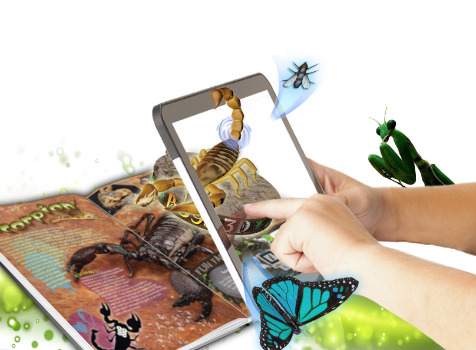
  1. Augmented and/or Virtual Reality (AR/VR): Imagine students who open a book and the stories inside literally pop out! Not hard to imagine for those of you who play the Nintendo 3DS right now. Or imagine students putting on virtual helmets/goggles and literally quote-unquote being IN the story. Safe to say, studying will be way more fun for these students than for us now.
  1. Holodeck Classrooms: a huge step above AR or VR, a whole classroom that is the setting of the story! Students can literally quote-unquote walk around in the story of the book.
  1. Smart Glasses or Smart Contact Lenses: I can see a future where people walk around with glasses that are actually their smartphone, laptop, AR and VR devices, Skype; all in a little square right in front of their eyes. Or better yet, in a little circle right ON their eyes!
  2. The Internet of Everything: long story short, the future will have our refrigerators, homes, cars, smartphones, computers, etc. all linked together. 24/7 people will be connected to something online. So when students are simply walking around, something can be “activated” in their smart glasses/contact lenses that sends that information to their laptop so that they can work on it later. When the student gets home, their home can remind them of their homework assignment and about the things that were added to it while they walked around.
  3. Mechanical Friends: the easy answer, robots! But before we get to that stage, how about things like Siri, but times a thousand! A little friend that is everywhere, thanks to the internet being everywhere. (See the previous point.)
  4. Brain Implants: this one is a bit scary in my opinion. People in the future just being implanted with a chip with all the information they would need in it. Is it possible? Should we do it? I will leave that up to you, the listener/reader.


Technology without a doubt will affect the way education is presented to students. It already has, and it will continue in the future. I would like to end this recording with two, in my opinion, very important questions about technology and its affect on education in the future:


  • The biggest question in my opinion is, as Jeff Selingo asked in his article about automation in the future, “What kind of education is needed to stay ahead of automation, or more likely, to complement technology?” Technology is not just improving FOR us humans. It is also improving vastly in the field of automation. More and more jobs are being done by “robots.” Therefore, our way of thinking about what jobs will be available in the future must change. Which means our thinking of what we need to learn much change. Which in turn leads to our education must change as well. So, I ask again, what kind of education will be needed in the workplace of the future?
  • Peter Diamindis’ article states that as technology advances, it becomes cheaper and cheaper. Which means, “ the child of a billionaire or the child of a pauper will have the same access to the same (best) [sic] education delivered by such an AI, effectively for free.” My question is thus, can technology really bridge the gap between the haves and the have-nots in the field of education? I personally hope so, but we will see.
(End Script)


And with that, we end this blog. The future is coming, are we ready for it? Are we preparing for it in the right way? I guess we'll find out together!


References
Diamandis, P. (2016, July 18). Why The Cost Of Living Is Poised To Plummet In The Next 20 Years. Retrieved April 11, 2017, from https://singularityhub.com/2016/07/18/why-the-cost-of-living-is-poised-to-plummet-in-the-next-20-years/


Dunwill, E. (2016, March 16). 4 Changes That Will Shape The Classroom Of The Future: Making Education Fully Technological. Retrieved April 11, 2017, from https://elearningindustry.com/4-changes-will-shape-classroom-of-the-future-making-education-fully-technological


Kliegman, J. (2016, May 2). How Smart Contact Lenses Will Create The Sci-Fi Eyes Of The Future. Retrieved April 11, 2017, from http://theweek.com/articles/617205/how-smart-contact-lenses-create-scifi-eyes-future


Marcus, G. and Koch, K. "The Future Of Brain Implants." The Wall Street Journal 14 Mar. 2014, https://www.wsj.com/news/articles/SB10001424052702304914904579435592981780528.
Accessed 11 April 2017.


Minerva Schools At KGI. (n.d.) Higher Education For The 21st Century. Retrieved  April 11, 2017, from https://www.minerva.kgi.edu/


Selingo, J. (2016, August 17). What Happens When Millions Of Jobs Are Lost Because Of Automation? Retrieved April 11, 2017, from https://www.linkedin.com/pulse/what-happens-when-millions-jobs-lost-because-jeff-selingo


Friday, March 31, 2017

Technology and Mobile Learning

Technology


As someone who grew up before what I consider the big technological explosion (for this blog lets go with the year 2007, the year the iPhone was first release), the way education was done was completely different to the way it is now. Technology, whether one loves it or hates it, is such an integral part of our daily lives.

As a teacher myself now, I need to find ways to incorporate it into my lessons. I can not do it the way my teachers did it. If I did it like that, I would be doing my students a huge disservice! There are so many reasons to include technology in the classroom, that for me to not use it is like preventing my students from being able to learn at their full potential. Here are but three of them.

Reasons:
One reason to use technology is simply because with technology, the world is in one's fingertips! A teacher can drastically expand a lesson: add songs, videos, images, maps, etc. If a teacher gets an idea in the middle of the lesson (as so often happens to me!), that teacher can instantly add that into the lesson thanks to technology!


Which leads to my second point, differentiated instruction. With technology, a teacher no longer needs to make a one-size-fits-all lesson plan! As we all know, each student is unique. Therefore, each student learns in his/her own particular way. With technology, a teacher can better accommodate for these situations.


Technology can also better help a teacher see where students are having problems. With the right technology, a teacher can better assess a student. Technology can more specifically pinpoint a student's strengths and weaknesses, helping the teacher be better able to focus on those parts where the student needs help. This in turn goes back to the point above, by better knowing where a student is struggling, a teacher can differentiate his/her lessons to help a struggling student.


Mobile Learning


Okay, so we can see how technology is good for the classroom. Now let's talk about one piece of technology in particular that can be very useful in a class room, mobile technology. With mobile technology, the world is IN your hands! Before we get to some specific examples, lets see a pic to show some of my guiding principles with (mobile technology in the classroom:


(Yes, I am aware that the picture is not just about mobile technology, but its principles are all the same.)

Engage: have my students be more engaged in the lesson by showing videos, songs, funny images. The more fun they have, the more they want to learn!
Communicate: using mobile technology, I can communicate directly with parents in an instant. But more importantly, my students can communicate with me instantly! I always tell my students that no matter how old they get, I will always be there to help them! Now, I can also say: "No matter what time it is, I will always be there to help you!"
Learn: well this one is pretty self-explanatory. This whole blog is about using technology for learning! So read above and below!
Create: students have the opportunity to not just listen to a lesson, but to make it their own! They can create so many things for the lesson. Whether it be in a project for Project Based Learning; in creating a game for Game Based Learning; or simply creating something fun out of their own wild imaginations; mobile technology can help my students become more creative, while learning!

So what can I, and my students, do with mobile technology:

  1. Something simple (that is stated above): show my students videos! Play them songs! Show them (funny) images for vocabulary that they don't understand. Just add to the lesson.
  2. My students can record themselves in the class. They (along with their parents) can use these videos in order to see their progress throughout the year.
  3. My students can befriend students in other countries in order to expand their minds; like a modern take on a pen-pal. (I am actually in the process of doing this now! Fingers crossed that I can put this idea into action soon!)
  4. Have my students have fun with a lesson! Whether it be by having them be more involved/interacted with the lesson; by having them create something and add it to the lesson; the important thing is that they have fun!
  5. Give my students choices in the way they learn! The more choices they have, the more fun they can have. Plus, as stated above, not all students are the same, so lessons shouldn't be either! The best part here is that by giving students choices, they are doing a lot of the above in just one thing... a choice! (Have fun, have differentiated learning, etc.)
Some activities:

  1. The easy one: play games on the mobile device!
  2. Gather data of a specific location on field trips.
  3. Gather data on specific animals while at the zoo.
  4. Take pictures of the language one is studying and use translating devices on the spot.
  5. Go outside the classroom and take pictures of the key vocabulary words of the lesson. For example, if studying shapes, take pictures of circled items, squared objects, etc. If studying colors, take pictures of blue things, green things, etc.
  6. Study outside the classroom! Study while at a park, or a forest, or a lake!

Technology and especially mobile learning can and is very useful for learning in the 21st Century. Hopefully, I can keep growing as a teacher and find better and more meaningful ways to integrate it into my lessons.

To end this blog, lets just say:
Now, of course there are some negatives aspects to technology and some arguments can be made against using technology in the classroom. However, that can be the focus of another blog. We are keeping it all positive in this one! But just for fun, take a look at this:


References
Davis, V. (2015, January 15). 5 fantastic, fast, formative assessment tools. Retrieved from https://www.edutopia.org/blog/5-fast-formative-assessment-tools-vicki-davis

Haynes, K. (n.d.) 12 easy ways to use technology in the classroom, even for technophobic teachers. Retrieved from http://www.teachhub.com/12-easy-ways-use-technology-your-classroom-even-technophobic-teachers

Stern, J. (2015, March 30). Enhancing learning through differentiated technology. Retrieved from https://www.edutopia.org/blog/enhanced-learning-through-differentiated-technology-julie-stern